
Powering Ghana's Future with Sustainable Innovation

 |  |  |  |  |  |  |
|---|---|---|---|---|---|---|
 |
FOOD WASTE TO ENERGY
Turn Organic Food Waste into Renewable Energy
Your food waste is not waste. It is energy waiting to be recovered.
Every day, restaurants, hotels, food-processing companies, supermarkets, markets, institutions and farms generate significant quantities of organic food waste. When this waste is dumped or poorly managed, it creates unpleasant odours, attracts pests, increases disposal costs and contributes to greenhouse-gas emissions.
Webber Energy Ghana transforms food waste into a valuable resource.
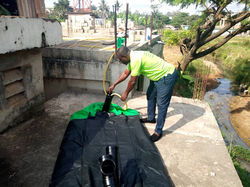
Our food-waste biodigester systems use anaerobic digestion to naturally break down biodegradable organic waste in an oxygen-free environment, producing biogas that can be used for cooking, heating or electricity generation.
At the same time, the digestion process produces digestate, a nutrient-rich by-product that can be processed and used as an organic soil amendment or fertilizer, subject to appropriate quality and regulatory requirements.
WHY PAY TO DISPOSE OF FOOD WASTE WHEN YOU CAN TURN IT INTO ENERGY?
Food waste can represent a significant operational and environmental cost for businesses.
Our biodigester solutions help organizations move from a waste-disposal model to a resource-recovery model.
Key Benefits
• Reduce food-waste disposal costs
Treat suitable organic waste on-site and reduce the quantity requiring transportation and disposal.
• Generate renewable biogas
Convert biodegradable food waste into methane-rich biogas that can be used as a renewable fuel.
• Reduce dependence on conventional energy
Use recovered biogas for compatible cooking, thermal or power applications, reducing reliance on LPG, diesel or other conventional fuels.
• Reduce environmental impact
Anaerobic digestion helps prevent uncontrolled decomposition of organic waste and can significantly improve waste-management performance.
• Produce useful digestate
The remaining organic material can be processed into a potentially valuable agricultural input, depending on feedstock quality and applicable standards.
• Improve hygiene and waste management
Properly designed systems provide controlled treatment of organic waste and help reduce odours, pests and uncontrolled dumping.
• Create a circular economy
Instead of treating food waste as a disposal problem, recover energy and nutrients from the same resource.

HOW OUR FOOD WASTE BIODIGESTER WORKS
Organic food waste is collected from kitchens, restaurants, food-processing areas, markets, supermarkets, institutions or other approved sources.
Typical feedstocks may include:
• Food scraps
• Fruit and vegetable waste
• Kitchen waste
• Restaurant waste
• Catering waste
• Food-processing residues
• Spoiled or rejected food products
• Selected agricultural residues
Important: The feedstock should be properly assessed before system design. Plastics, metals, glass, stones and other non-biodegradable materials must be removed.

+233 553 334444
SORTING & PRE-TREATMENT
The incoming waste is inspected and prepared before entering the digester.
Depending on the feedstock, pre-treatment may include:
• Manual or mechanical sorting
• Removal of plastics and contaminants
• Size reduction or shredding
• Slurry preparation
• Mixing with water or suitable liquid streams
• Removal of unsuitable materials
Why this matters: Consistent feedstock preparation protects equipment and helps maintain stable digestion.
BIOGAS COLLECTION & TREATMENT
The generated biogas is collected safely through a controlled gas system.
Depending on the application, treatment may include:
• Moisture removal
• Hydrogen sulphide reduction
• Filtration
• Pressure regulation
• Gas monitoring
• Safety devices
Proper gas conditioning protects downstream equipment and improves the reliability of the energy application.

Our Partners


